

Emission Testing Services in the Philippines — Complete Guide
Your essential guide to all emission testing services required for LTO registration. Learn requirements, costs, testing procedures, vehicle-specific standards, and expert preparation tips so you can pass your emission test smoothly and avoid delays.
What You’ll Find on This Page
A quick overview of what's included in this complete guide, so you can easily navigate to the sections that matter most for your emission test.
- Overview of emission testing services available in the Philippines
- Required documents and preparation steps for the test
- Cost breakdown and emission test validity
- How emission testing works inside a PETC
- Express lanes, booking options, and peak-hour guidelines
- Reasons why vehicles fail and how to avoid common issues
- Testing equipment and standards used by accredited centers
- Frequently asked questions from PH drivers
Quick Glossary
A short reference guide for common terms you’ll encounter when reading about emission testing in the Philippines.
CO / HC
Carbon Monoxide (CO) and Hydrocarbons (HC) are key pollutants measured in gasoline emission tests. High readings indicate poor combustion or engine tuning.
Opacity
A percentage value showing how dense diesel exhaust smoke is. Higher opacity means thicker smoke and a higher chance of failing the emission test.
PETC
Private Emission Testing Center accredited by the LTO. Only PETC-issued results are valid for LTO registration and renewal.
OBD Test
Uses a scanner to read your vehicle’s On-Board Diagnostics system. It checks sensor readiness, emission controls and error codes.
Idle Test
Gasoline vehicles are tested while idling at fixed RPM. Exhaust gases are sampled to check CO/HC levels according to DENR standards.
Smoke Test
Diesel engines are revved while a sensor measures smoke density (opacity). Results determine pass or fail.
LTO Certificate
The official emission test result required for LTO registration. Issued digitally or on paper by accredited PETCs.
Readiness Monitors
Indicators scanned during an OBD test to confirm whether emission-related systems have completed their diagnostic cycles.
What Are Emission Testing Services in the Philippines?
Emission testing services verify whether a vehicle meets the pollution limits required by the Land Transportation Office (LTO) and the Department of Environment and Natural Resources (DENR). These tests determine if your vehicle is eligible for LTO registration.
Quick answer: they check if your vehicle’s exhaust emissions meet LTO standards.
- Different tests apply to gasoline, diesel, and motorcycle engines.
- Pollutants measured include CO, HC, and smoke opacity.
- Required once a year for LTO registration.
- Performed only at LTO-accredited Private Emission Testing Centers (PETCs).
In the Philippines, all motor vehicles must pass an emission test before they can be registered or renewed with the LTO. This process ensures that engines are running efficiently and helps reduce air pollution in highly congested areas.
Gasoline vehicles typically undergo CO/HC analysis, diesel units are checked for smoke opacity, and motorcycles follow a streamlined procedure. Some modern centers also use OBD scanners for sensor and system readiness checks.
Emission Testing Service Categories
Explore the main types of emission testing services offered by accredited centers in the Philippines. Each category below leads to a dedicated guide with detailed explanations, requirements and practical tips.




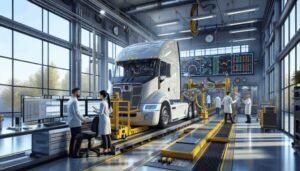




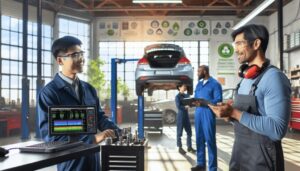
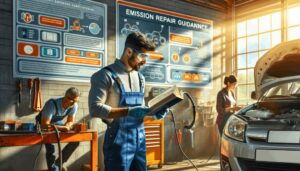
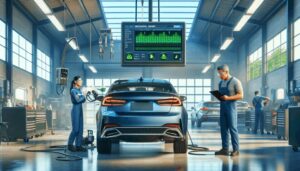





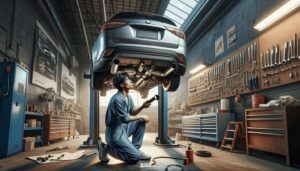

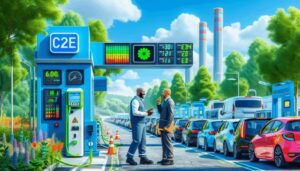

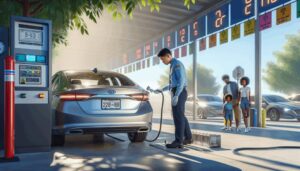








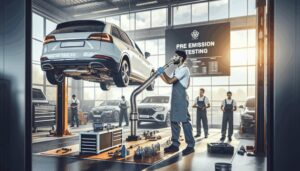










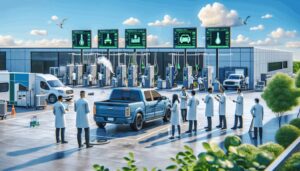
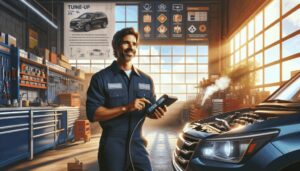

Main Types of Emission Testing Services
Accredited emission testing centers in the Philippines offer different services depending on your vehicle type and engine. Use this overview to understand which test you’ll most likely need before booking or visiting a center.
Gasoline & Light Vehicle Tests (CO/HC)
- Used for most sedans, hatchbacks, AUVs, and gasoline SUVs.
- Measures Carbon Monoxide (CO) and Hydrocarbons (HC).
- Performed at idle or controlled RPM levels.
- Helps detect poor tuning and fuel mixture issues.
Diesel & Commercial Vehicle Smoke Tests
- Required for jeepneys, buses, vans, delivery trucks and many PUVs.
- Measures smoke density (opacity percentage) under controlled revs.
- High opacity often signals injector, turbo or engine issues.
- Essential for diesel fleets and commercial vehicles.
Motorcycle & Small Engine Emission Tests
- Focused on scooters, underbones, big bikes and other two-wheelers.
- Uses lighter limits but still checks if emissions are within standards.
- Important for high-usage units like delivery and ride-hailing bikes.
- Helps reduce smoke and odor in dense traffic areas.
Additional & Support Services Around the Test
- Quick pre-checks of exhaust leaks, obvious smoke or warning lights.
- Re-test options after repairs if the vehicle initially fails.
- Basic guidance on documents, validity period and LTO requirements.
- Some centers offer simple diagnostics or referral to repair shops.
How to Choose the Right Emission Test for Your Vehicle
Not sure which emission test your vehicle needs? Use this quick guide to match your vehicle type and fuel to the most common tests used for LTO registration in the Philippines.
Quick match by vehicle type
- Private gasoline car, sedan, hatchback, AUV, SUV → Gasoline & Light Vehicle Emission Test (CO/HC).
- Diesel vans, pickups, light trucks, delivery vehicles → Diesel & Commercial Vehicle Smoke Test (opacity).
- Jeepneys, PUVs, minibuses, company shuttles → Diesel or PUV smoke test as required by the PETC and LTO classification.
- Motorcycles, scooters, underbones, big bikes → Motorcycle & Small Engine Emission Test.
- Fleet vehicles (taxis, TNVS, corporate units) → Fleet Emission Testing package, usually scheduled in batches.
If you are unsure about your vehicle classification, check your OR/CR or ask the emission testing center to confirm which test applies before you line up.
Before choosing a testing center
- Confirm your fuel type: gasoline vs diesel determines the procedure and limits.
- Check your LTO classification: private, PUV, commercial, or government use.
- Ask if they handle your vehicle size: some centers cannot test very large trucks or buses.
- Look for fast lanes or online booking if you have a tight schedule or are visiting during peak months.
- Bring previous emission results (if any): they help mechanics or PETC staff compare improvements after repairs.
Once you know your vehicle type and fuel, you can browse the specific service guides below and choose a nearby accredited PETC that offers the right test.
Emission Testing Services — FAQs
These quick answers focus on how emission testing services are organized, how Emittro helps you, and how to choose the right guide for your next LTO emission test.
What exactly are “emission testing services” on Emittro?
On Emittro, “emission testing services” are practical guides that explain each step of the emission test required for LTO registration. Instead of offering the test itself, we help you understand:
- Which type of emission test your vehicle needs (gasoline, diesel, motorcycle, etc.).
- What documents and requirements you should prepare in advance.
- What to expect during testing and how to avoid common reasons for failing.
Does Emittro operate or manage any emission testing centers?
No. Emittro does not operate or manage any emission testing centers. We are an independent online directory and information hub:
- We list centers used for LTO registration across the Philippines.
- We organize guides about emission testing services and requirements.
- All prices, conditions and availability depend on each individual center.
Can I book or pay for an emission test directly through Emittro?
At the moment, Emittro is focused on information and navigation, not on online payments or bookings. In some cases, our service guides may show:
- Links to a center’s official Facebook Page or website.
- Basic contact details so you can call or message them directly.
Any booking, payment or scheduling is always done with the center itself, not through Emittro.
How do I know which emission service guide is right for my vehicle?
A simple rule is to start by your fuel type and vehicle category:
- Gasoline cars, UVs, SUVs: look for guides on CO/HC emission tests.
- Diesel vans, trucks, jeepneys & PUVs: check smoke opacity / diesel tests.
- Motorcycles & small engines: check motorcycle emission test guides.
The service grid on this page groups articles by category so you can quickly pick the most relevant guide for your upcoming emission test.
Are the service guides on Emittro free to read and use?
Yes. All service guides published on Emittro are 100% free to read and use. Our goal is to make emission testing easier to understand for drivers in the Philippines by:
- Centralizing practical information in one place.
- Reducing guesswork about requirements, timing and validity.
- Helping you prepare better so you avoid repeat visits and failed tests.
How often should I use emission testing services for LTO registration?
In most cases, vehicles in the Philippines need to pass an emission test once a year, as part of the LTO renewal process. Many drivers use Emittro:
- When planning their next renewal and checking current requirements.
- Before visiting a testing center, to understand what to expect.
- After a failed test, to review preparation tips and common issues.
Where can I see the full list of emission testing service guides?
On this page, you will find a dedicated service grid that groups all emission test service guides published on Emittro. From there you can:
- Filter mentally by topic (cost, requirements, vehicle type, preparation, etc.).
- Open each article in a new tab to prepare for your next emission test.
- Come back to this hub whenever you need an overview of all services.
Ready to plan your next emission test?
Use Emittro’s service guides to prepare your documents, understand the test, and choose the right emission testing center for your LTO registration. Start with the topic that matters most to you right now.